Inside the appliance
Washer inlet and drain hoses. In plain English.
Frigidaire sorts a washer leak by where the water comes from. The inlet hoses and their connections come first, then the drain hose in the standpipe. Cracks in the blue or red connector usually come from over-tightening and need service.
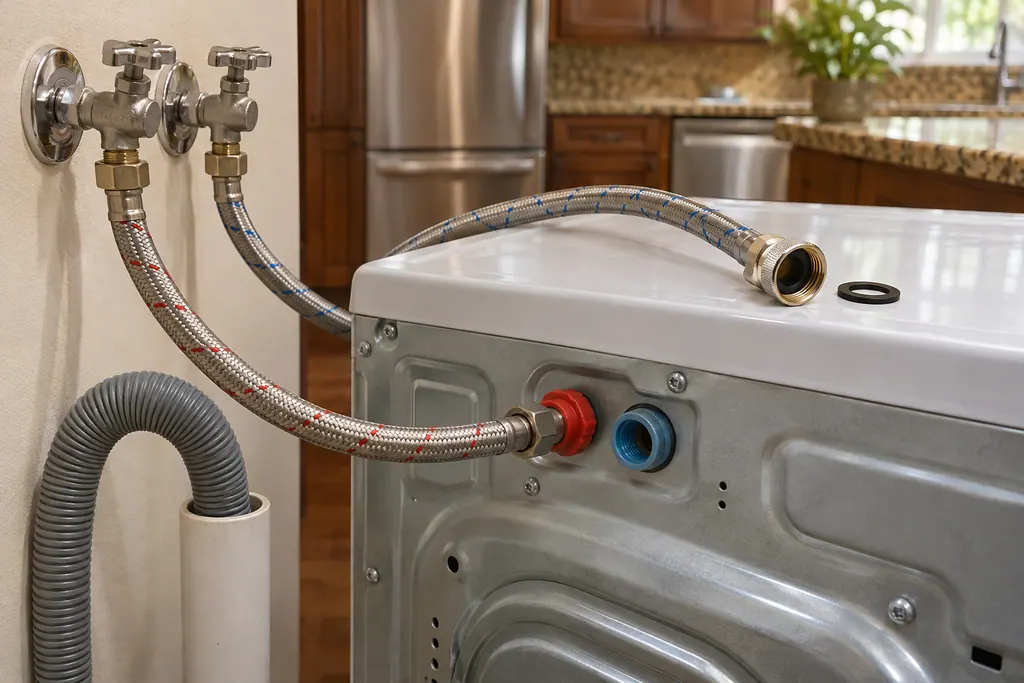
Where it fits.
Washer inlet and drain hoses in the appliance
The inlet hoses run from the supply faucets to the back of the washer. The drain hose goes into the standpipe. Frigidaire’s articles name the connections but don’t show the hose layout.
The photo shows the kind of part. It is not a guide to the right replacement for your model.
What you notice when this part needs attention.
Trouble with the Washer inlet and drain hoses can show up as weaker performance or a code that keeps coming back. Only testing shows whether this part is the cause.
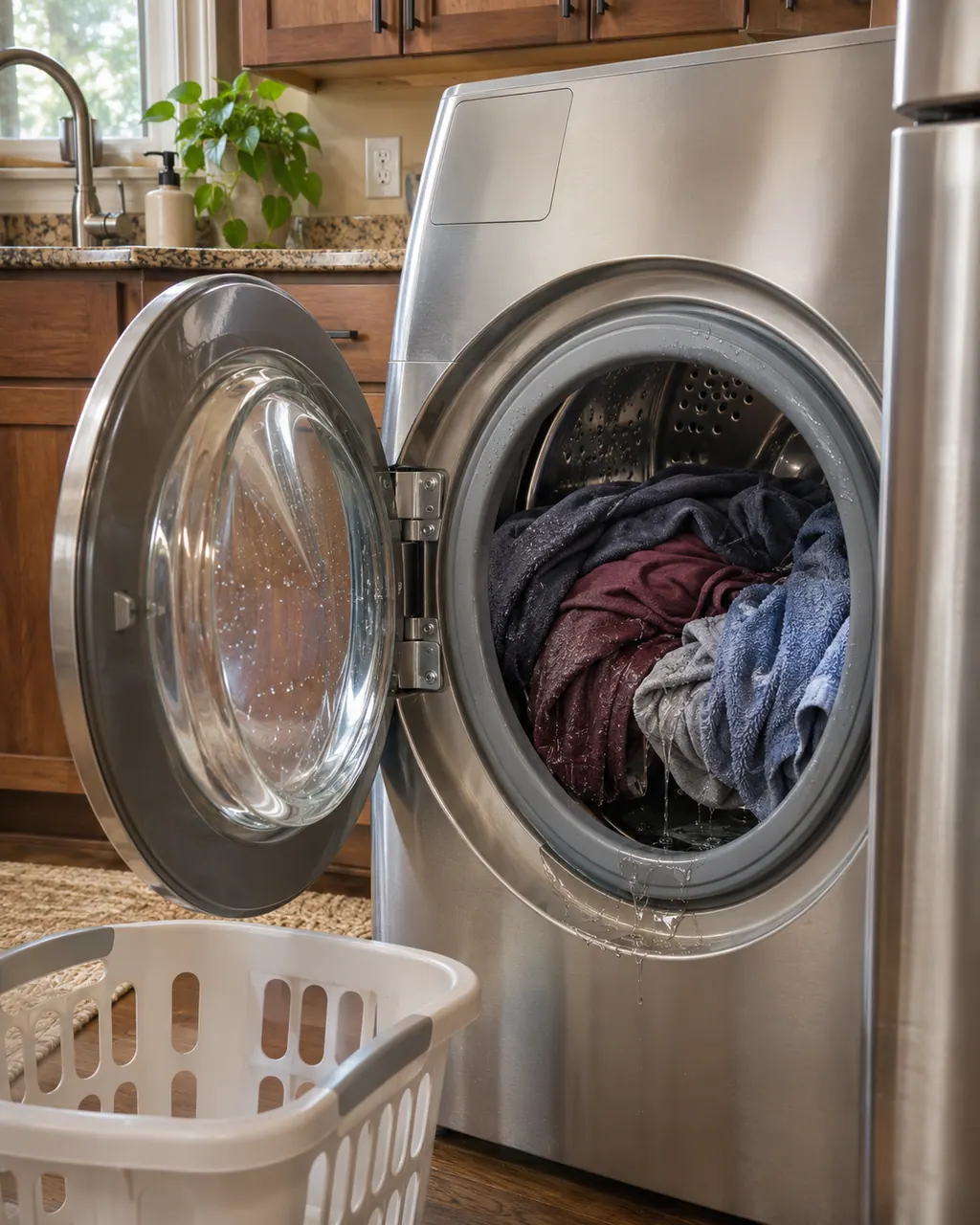
Frigidaire washer not spinning
On a top-load Frigidaire, the usual cause is an unbalanced load or a lid that isn’t closed. Frigidaire’s tub-not-spinning article says to power off, wait for the lid to unlock, rearrange the clothes and restart. After that it checks load size, shipping materials, level and hose connections.
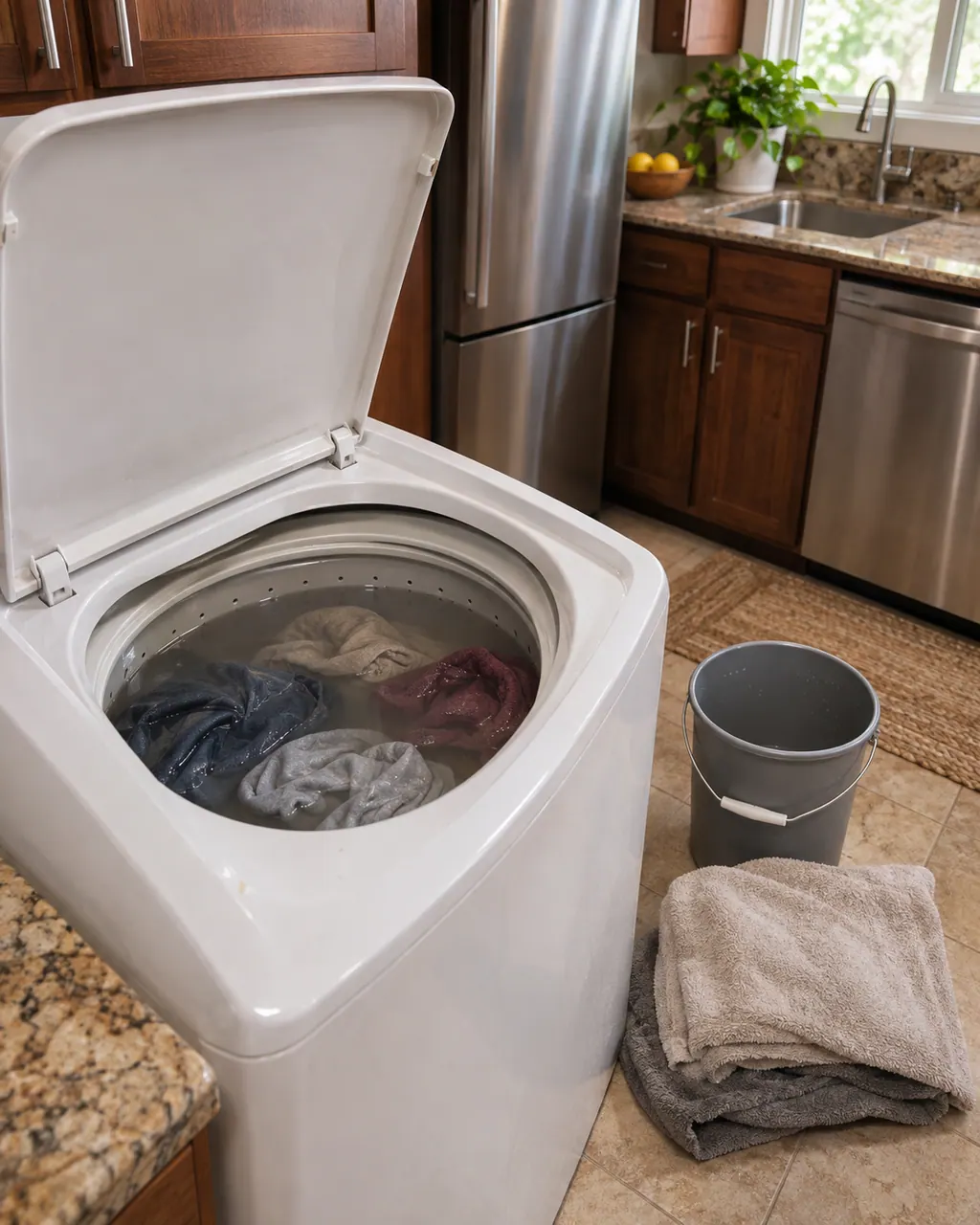
Frigidaire washer not draining
On a top-load Frigidaire, check the drain hose and standpipe first, then detergent. E2 means the unit took over 10 minutes to drain. Frigidaire’s article asks if the washer has been moved, if the hose is kinked, and if the standpipe is the right height.
Owner care, within the model instructions.
Turn the appliance off and unplug it before any owner check. Look out for standing water and sharp debris. Never touch a wet plug or wiring, take off service panels, or go past the owner steps in your manual.
- 1
Shut the water off
Turn off both supply faucets and wipe up the water before you look at a hose.
- 2
Inspect the inlet hoses
Check for kinks or holes and check every connection. Disconnect one and look at the O-ring gasket: it must be visible and undamaged.
- 3
Check the connector
Look at the blue and red connectors on the washer for cracks. To reconnect, hand tighten and then add another half turn with a wrench.
- 4
Check the fill-hose threads
The connections at the faucet and the washer must not be loose or cross-threaded, and the rubber sealing washers must be seated and in good shape.
- 5
Secure the drain hose
Frigidaire says it should be tied to the drainpipe with a cable tie or bracket, not hanging loose. To test the house drain, pour a gallon of water down it. If it comes back up, call a plumber.
Cleaning or replacement?
Leave internal testing to a technician.
Book a visit if a connector is cracked, a hose is damaged or leaking, or the leak continues after the connection checks.
On front-load models, AL F0 means the anti-flood device activated: close the water taps, unplug the washer and book. Installed in the last 30 days? Frigidaire says go back to the installer first.
Arrange a diagnosticSee the neighboring components.
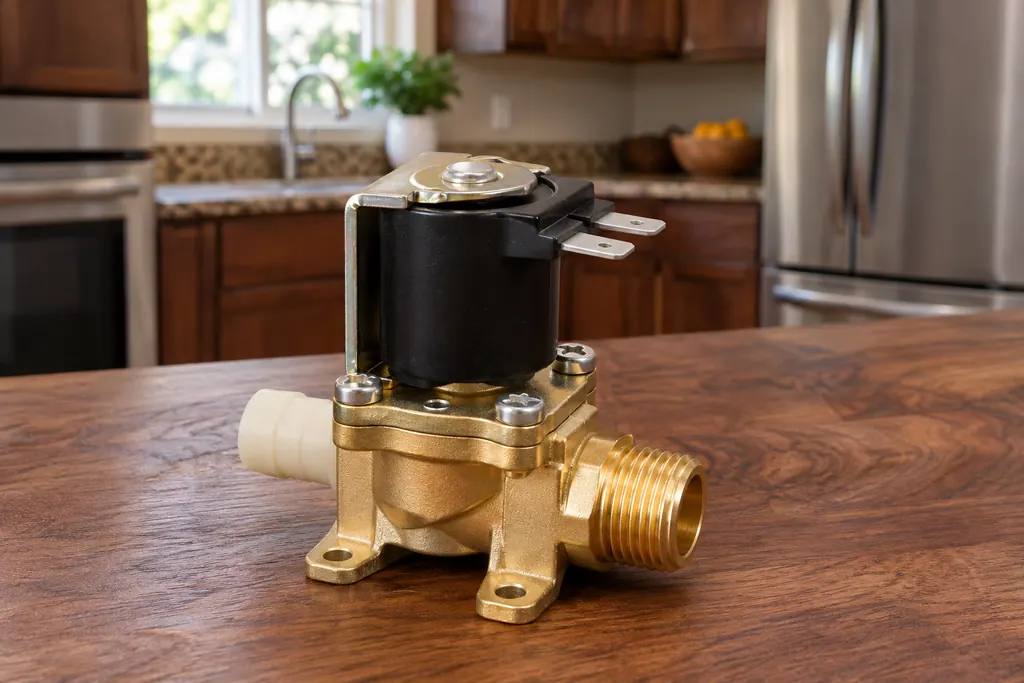
Water inlet valve
The water inlet valve opens to let supply water into the appliance, and shuts to stop it. Frigidaire’s guides name it for dishwasher codes i10 and i30, for refrigerator ice maker and dispenser water, and for washer filling. Hissing or buzzing as it opens is normal.
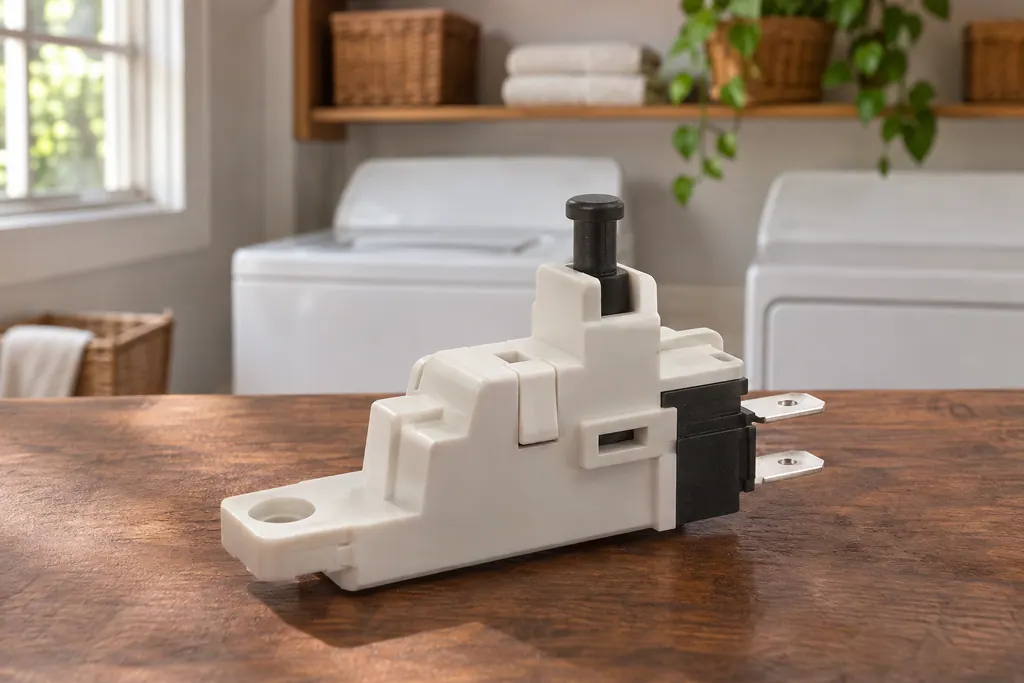
Washer lid lock
On a Frigidaire top-load washer, the safety lid lock keeps the lid shut during the final spin. Code E3 means the lid is open or the lid lock failed. Frigidaire says the lid can’t be opened during the Spin cycle and may take 1 to 3 minutes to release after you stop the washer.
Sources and model boundaries.
These documents back up the Washer inlet and drain hoses advice. Use the manual that matches your model.
- Laundry top load washer is leaking water (KB 1831569)
- What should I do if my washer is leaking? (KB 1853025)
- All about the Use & Care of your Washer, A29259301
Follow the instructions written for your own model. See how we research these pages.
How tight should an inlet hose be?
Frigidaire says to hand tighten, then use a wrench for an additional half turn. Cracks are normally caused by over-tightening.
How do I test the house drain?
Pour a gallon of water down the drainpipe. If it comes back up, the drain is clogged and Frigidaire says to contact a plumber.
Could a leak really be suds?
Yes. Frigidaire says non-HE detergent, or too much detergent in soft water, can overflow as suds that look like a leak.
What should I check first for washer inlet and drain hoses?
Turn off both supply faucets and wipe up the water before you look at a hose.
Code / problem / part / repair
From the code to what you do next.
Frigidaire washer not spinning
On a top-load Frigidaire, the usual cause is an unbalanced load or a lid that isn’t closed. Frigidaire’s tub-not-spinning article says to power off, wait for the lid to unlock, rearrange the clothes and restart. After that it checks load size, shipping materials, level and hose connections.
Washer repair
Book a diagnostic for your model, done at your home.
Find your metro
Office addresses and the entry details to have ready.