Start from the symptom
Frigidaire refrigerator frost build-up.
Frigidaire explains frost as warm and cold air meeting below 32°F, and lists four causes: a door or gasket that doesn’t seal, an ice chute flap that doesn’t close, a setting colder than the recommended 0°F, and food blocking the air paths. Check those four. Unplug before you remove frost.
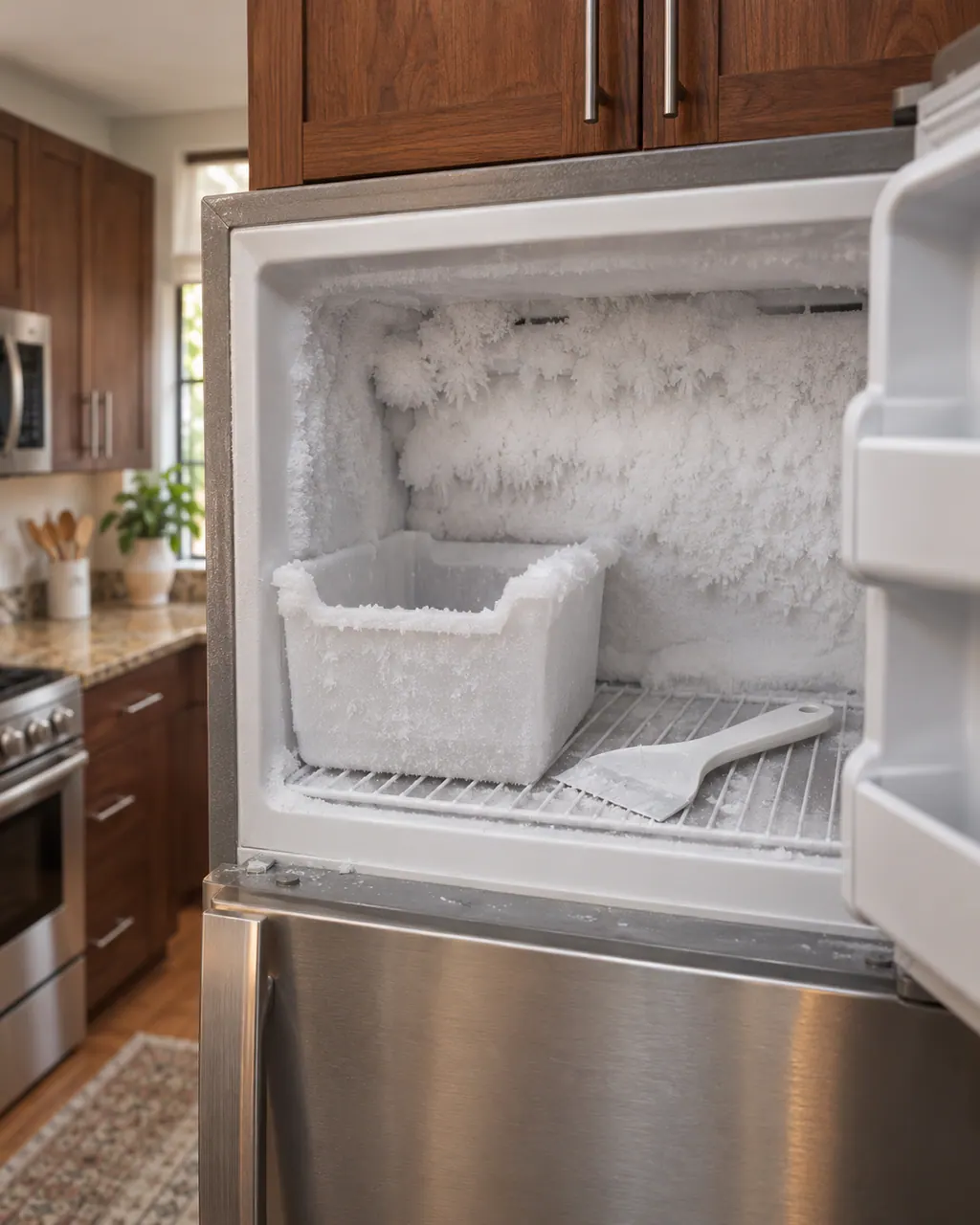
Start with safe observations.
Turn the appliance off and unplug it before any owner check. Look out for standing water and sharp debris. Never touch a wet plug or wiring, take off service panels, or go past the owner steps in your manual.
- 1
Close the door fully
Make sure the door closes all the way and nothing, such as a bin or bag, holds it open.
- 2
Check the gasket
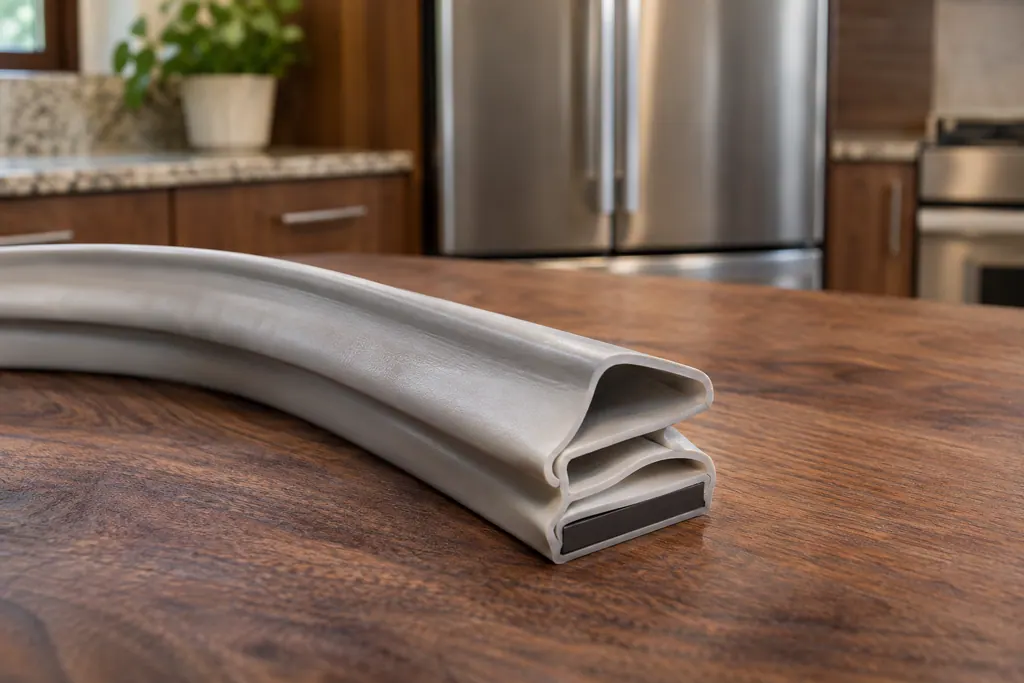
Look at the door gasket for warps or gaps that stop it sealing. Frigidaire names a warped gasket or door as a cause. Washing it with warm soapy water is the only cleaning step the sources give.
- 3
Close the ice chute
On models with a dispenser, make sure the chute is completely shut. Frigidaire says ice can get stuck and stop it closing.
- 4
Raise the setting
The recommended freezer setting is 0°F. Going below it can over-freeze food and form frost.
- 5
Free the vents
Keep food away from the vents and out of the direct line of cold air. Frigidaire says blocked pathways let frost collect on the products.
- 6
Removing frost
The refrigerator manual says the unit defrosts automatically through air cooling, and that frost can be removed by disconnecting the appliance and wiping it with a dry towel. The same manual warns against mechanical devices for defrosting.
Systems a technician may investigate.
These parts are linked to the problem. What you noticed does not prove any one of them has failed.
If the display adds a code.
Keep the exact message.
We have not researched code meanings for this appliance yet. Use its manual and add a photo of the display to your request.
See the research statusRead the related care guide.
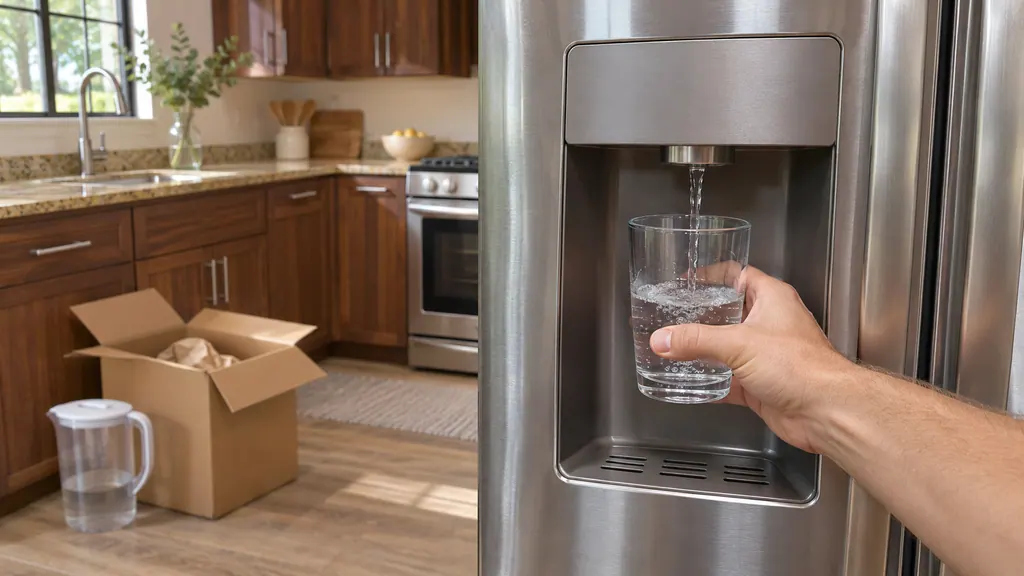
New fridge, no ice or water? Start here.
Air trapped in the new water line is the first thing Frigidaire names for uneven water or empty ice cycles on a just-installed unit. Prime and purge the line, give the ice maker up to 24 hours after the fridge has cooled, and check the water supply, the filter and the display lock.
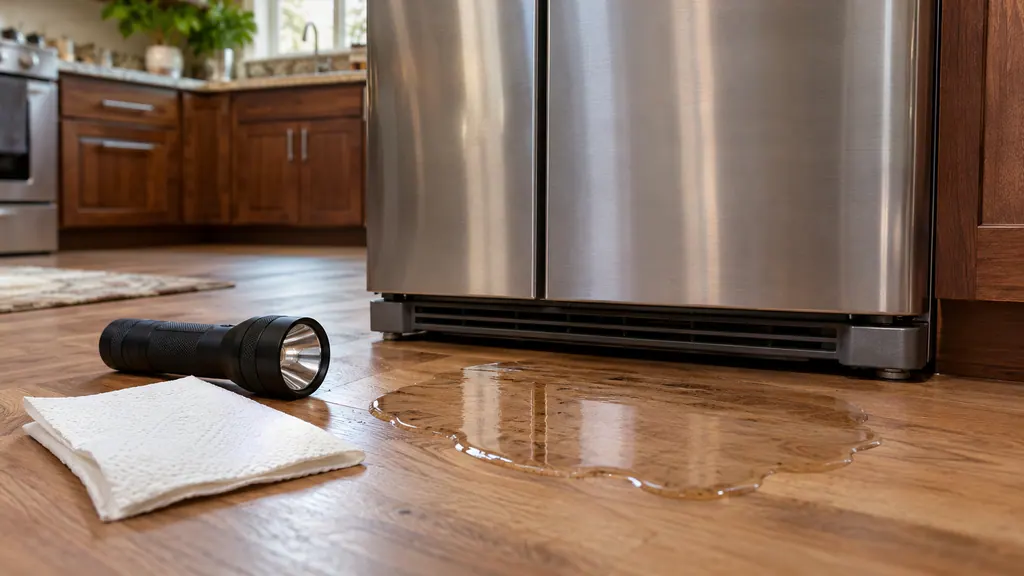
Puddle under the fridge? Start here.
Frigidaire sorts refrigerator leaks by where the water is: outside the unit at the back connections and valve, inside the cabinet at the water filter, or at the dispenser chute and tip. A door left open can also ice up the evaporator and drip from the bottom.
When observation becomes a service request.
Leave internal testing to a technician.
Book a visit if frost returns after the door, gasket, chute, setting and vents have all been checked, or if you see heavy ice at the back wall or under the food.
Arrange a diagnosticSources and model boundaries.
These documents back up the Frigidaire refrigerator frost build-up advice. Use the manual that matches your model.
- Refrigerators / Freezer - Frost Build Up (KB 1918348)
- Refrigerator Use & Care Guide, A28067202
- Refrigerator Water Leaks (KB 1847166)
Follow the instructions written for your own model. See how we research these pages.
What causes frost in a Frigidaire freezer?
Frigidaire says warm and cold air meeting in a below-32°F space. Typical causes are a door or gasket that doesn’t seal, a chute flap that doesn’t close, a very cold setting and blocked airflow.
What temperature should the freezer be?
Frigidaire’s recommended freezer setting is 0°F, with acceptable operation from -6°F to 6°F in its articles. Settings below 0°F can freeze food too hard and cause frost.
How do I remove frost safely?
The manual says to disconnect the appliance first and wipe frost with a dry towel. It also warns against using mechanical devices to defrost.
Why is there water at the bottom after frost?
Frigidaire says an open door can ice up the evaporator, and the melting ice then leaks from the bottom. Close the door and see whether it returns to normal.
Can food placement cause frost?
Yes. Frigidaire says food blocking the air paths, or sitting in the direct line of cold air, collects frost over time.
Code / problem / part / repair
From the code to what you do next.
Frigidaire refrigerator leaking water
Frigidaire sorts refrigerator leaks by where the water shows up: outside the unit (back connections and the water valve), inside (the water filter), or at the dispenser (frost in the chute, or air in the line). A door left open can also ice up the evaporator and leak from the bottom. Find the spot first, and book if the source isn’t one of these.
Refrigerator door gasket
The door gasket is the flexible seal around the refrigerator and freezer doors. Frigidaire links a dirty, warped or non-sealing gasket to unstable temperatures, frost and doors that won’t close. You can clean it with warm soapy water and test the seal with a dollar bill.
Refrigerator repair
Book a diagnostic for your model, done at your home.
Find your metro
Office addresses and the entry details to have ready.